Shaktigiri Temple and Sacred Spaces
A sacred landscape, walked from the outer to the inner
Shaktigiri Devasthanam
The spiritual axis — Shiva, Shakti and Ganesha on the hillock
The Shaktigiri hillock rises at the head of the site, marked on the plan as the place of Shiva, Shakti and Ganesha. In the concept, its summit is the Bindu — where Maa Lalitha Devi presides with Mahadeva and Swayambhu Yoga Ganapati.
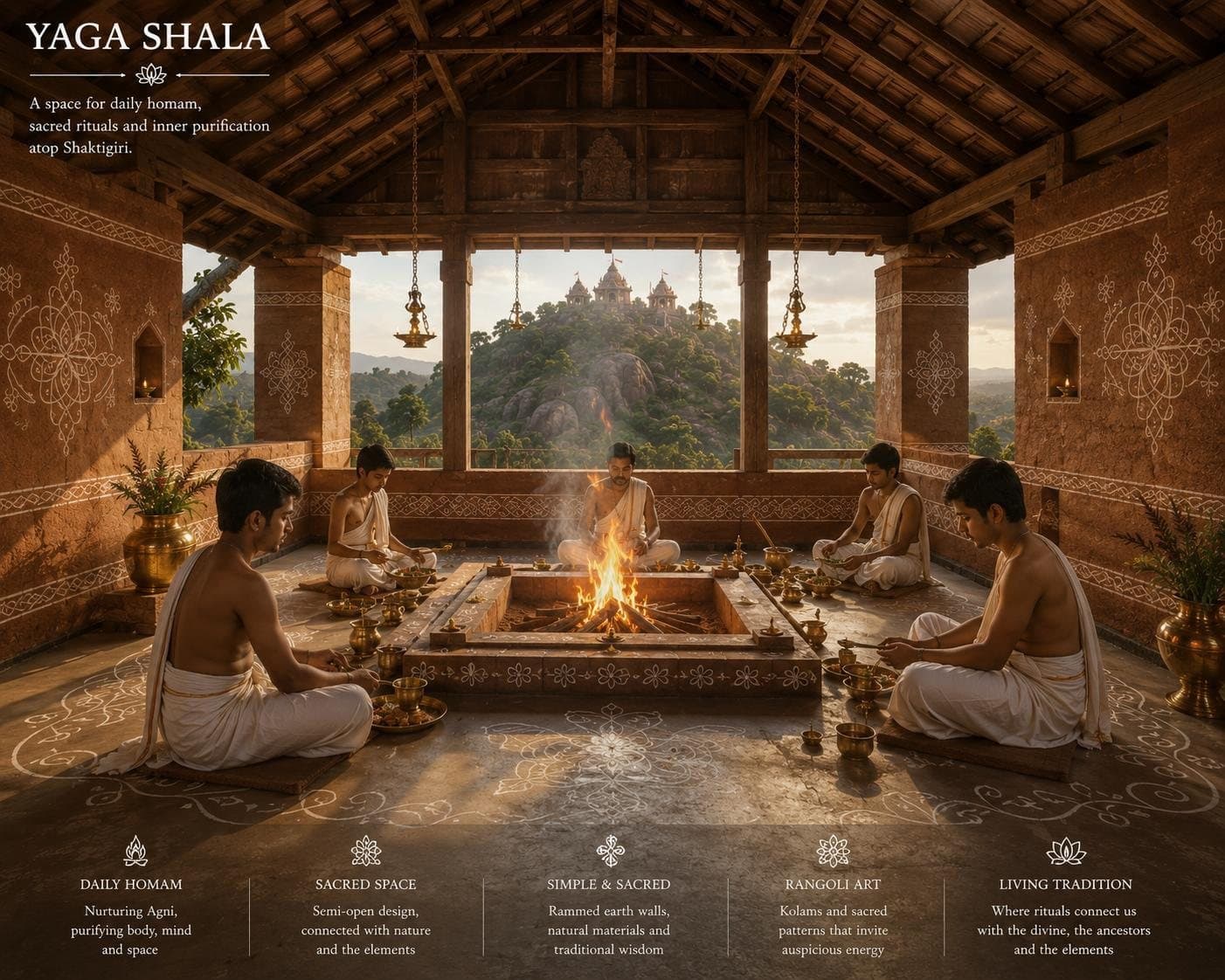
The shrines photographed here — the sacred stone shrine, Nandi, Maa Lalitha Devi and Yoga Ganapati — are the devotional heart around which Vidyaranyam is envisioned. The concept also imagines small temples to Sri Ganesha, Sri Shakti and Sri Shiva and a Yaga Shala for daily homam on the hilltop.
“Shaktigiri Temple is not a meagre visual backdrop for Vidyaranyam, but a spiritual axis to the community.”
Showing 4 images
Photographs of the shrines today. Select an image to view it larger.
 Conceptual illustration
The hilltop, as envisioned
The concept imagines the hilltop as a sacred space of learning, living and realisation — small temples to Sri Ganesha, Sri Shakti and Sri Shiva beside a Yaga Shala: a semi-open space for daily homam, sacred rituals and inner purification atop Shaktigiri, built simply with rammed earth and natural materials.
 Conceptual illustration
Sri Padma Theertham
The lotus pond — threshold of the sacred journey
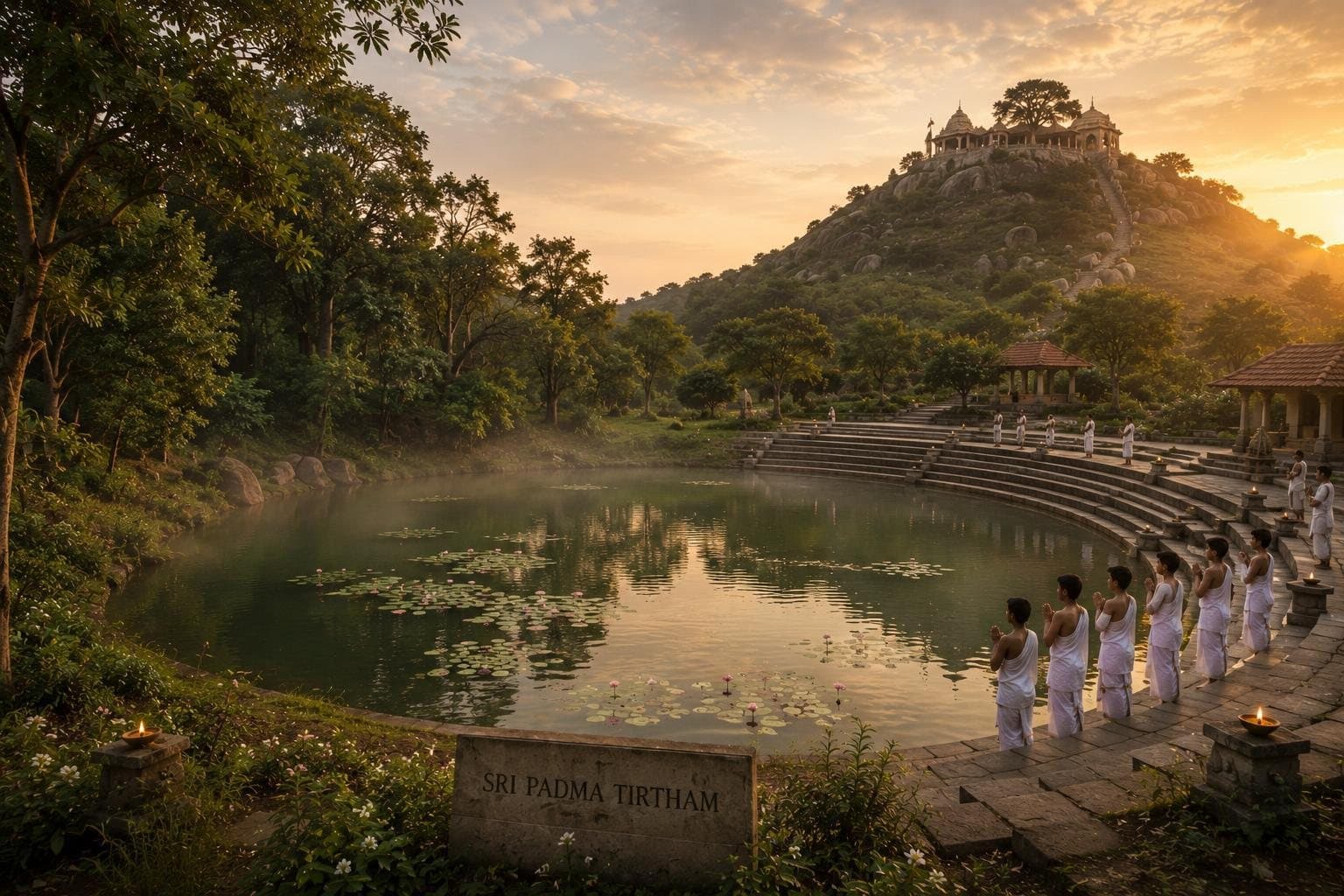
Also written as Sripada Theertham, the Lotus Pond
The lotus pond marks the beginning of the sacred journey — a place of purification and inner cleansing.
Set beside the entrance road, it is described in the plan as a place for reflection, beauty and gratitude, and the concept document calls it the threshold to Vidyaranyam.
 Conceptual illustration
Kalpataru
The tree between the hill and the Jeeva Dhara
Also written as Kalpavriksham
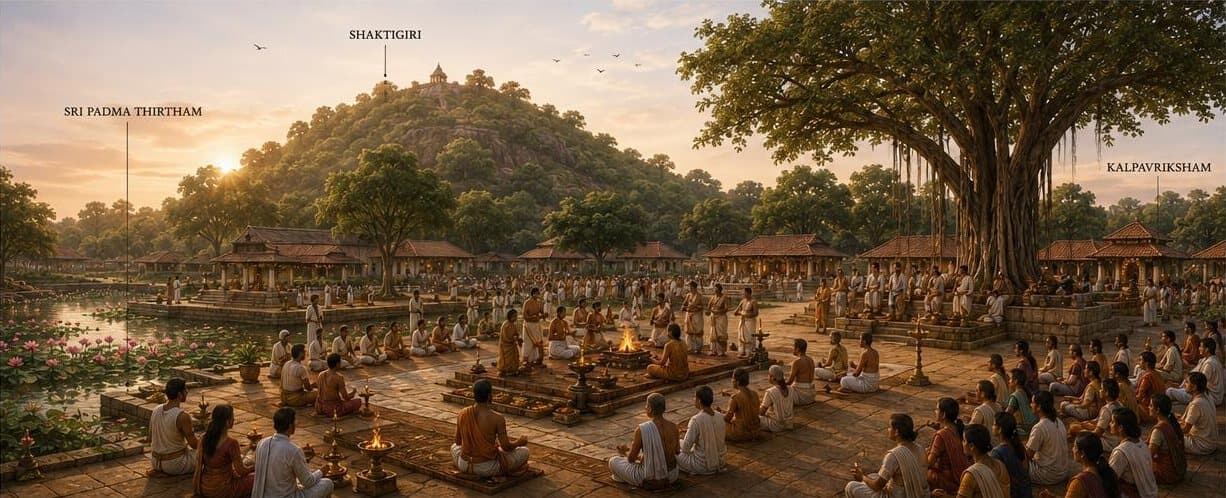
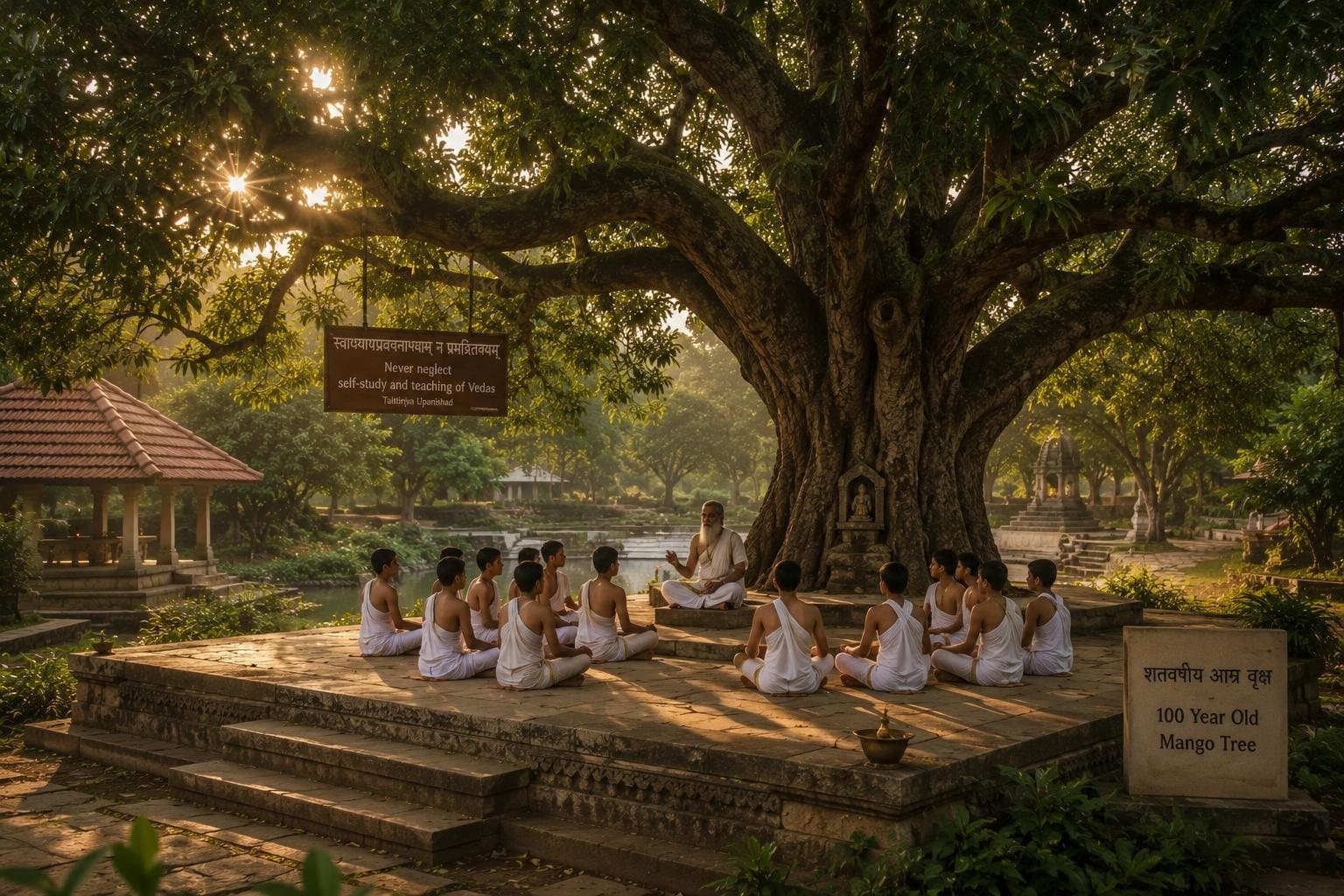
The Kalpataru stands between the hill and the Jeeva Dhara. The concept describes it as the wish-fulfilling tree blessed by the Jeeva Dhara, sheltering all who walk this sacred path.
At the Utsava Pranganam it is imagined as a great shade tree — a symbol of abundance and protection for the gatherings held beneath it.
 Conceptual illustration
Jeeva Dhara
The natural spring at the foothill
Also written as Jiva Dhara
The life current flows as a gentle natural spring at the foothill, nourishing the sacred landscape. It flows across the Kalpataru towards Sri Padma Theertham.
The site plan marks the natural spring beside an old mango tree — a life-giving source at the meeting of the hill and the land below.
Conceptual illustrationGiri Pradakshina
The circuit around the hill — a Navavarana Yatra
Also written as Giri Pradikshana
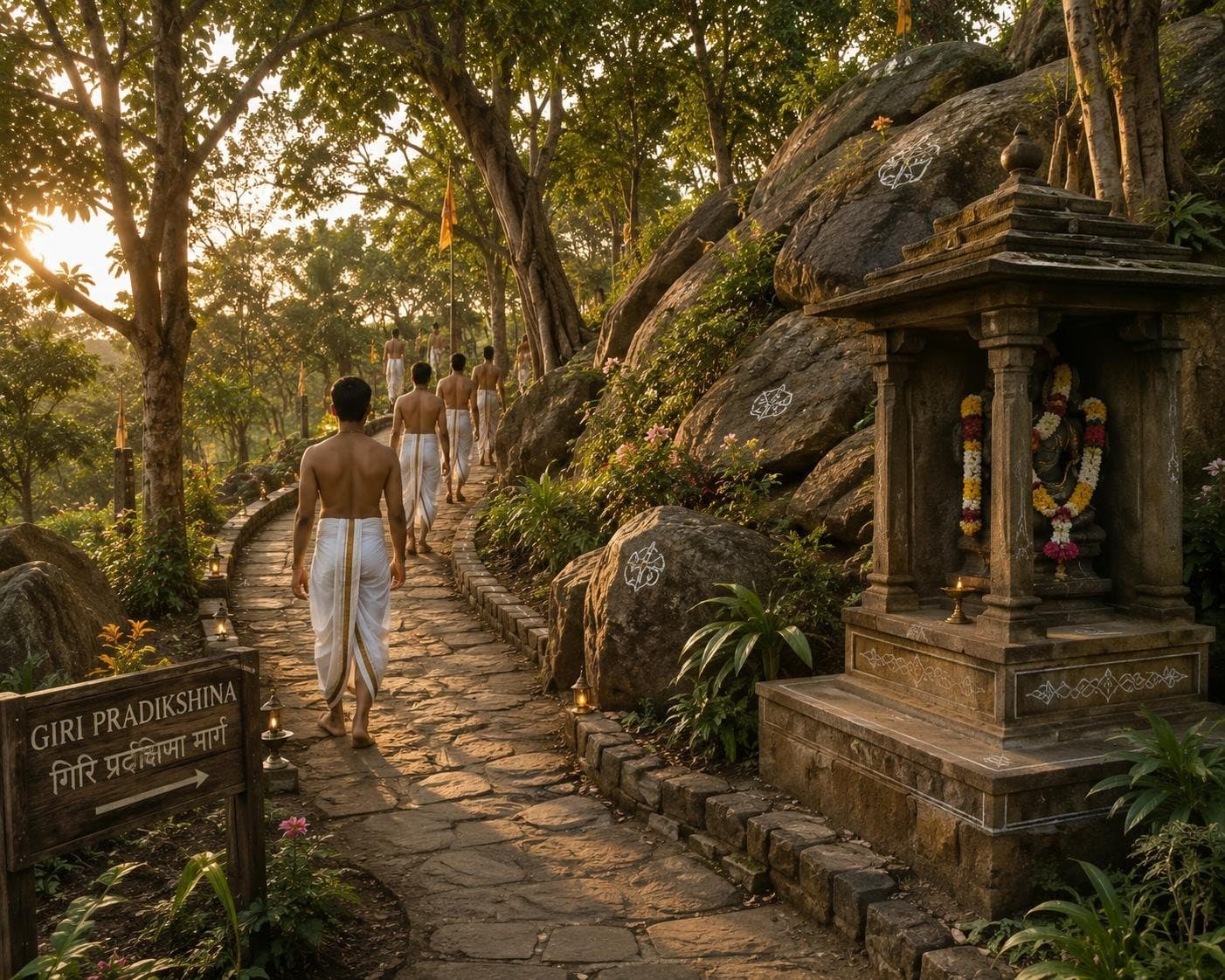
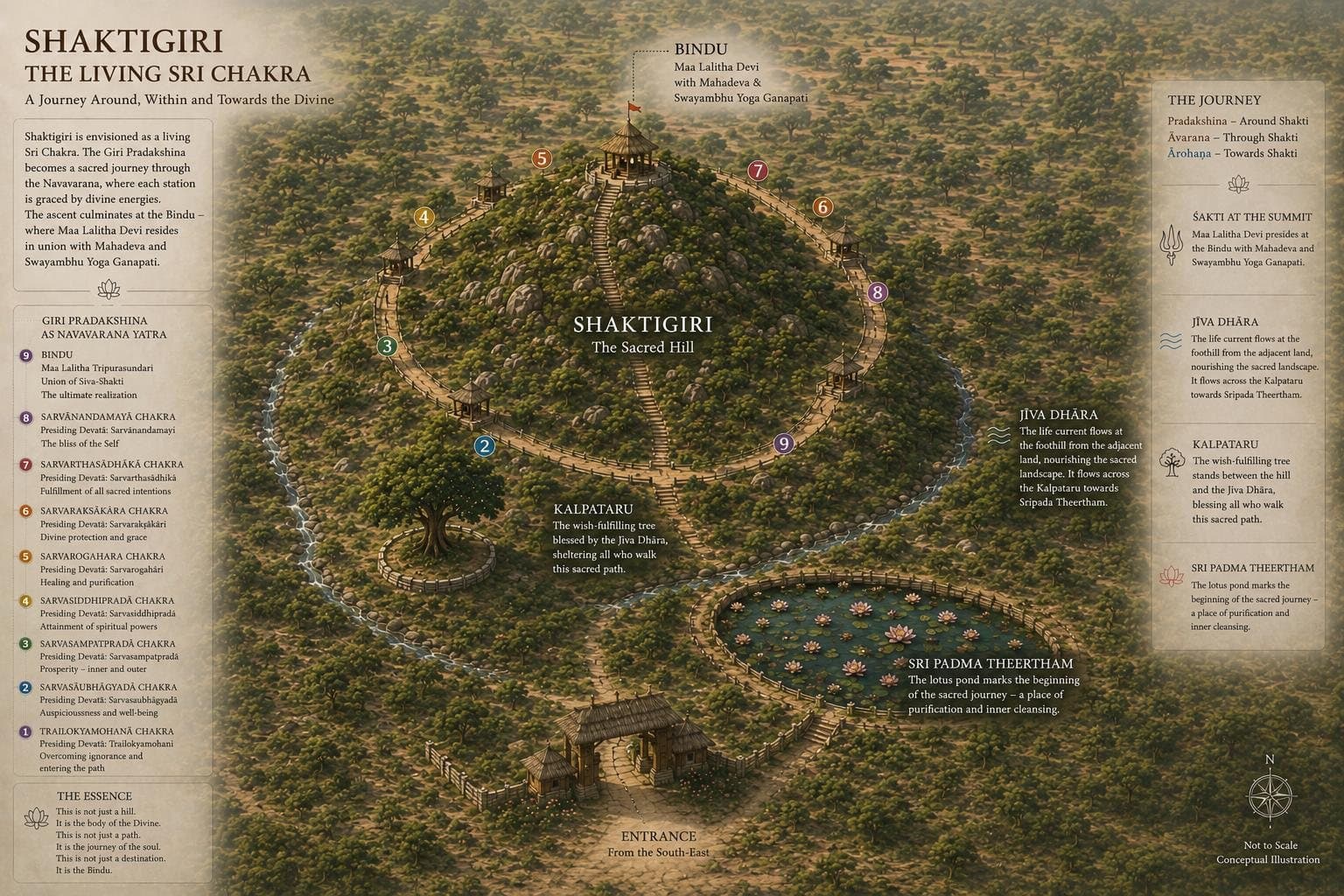
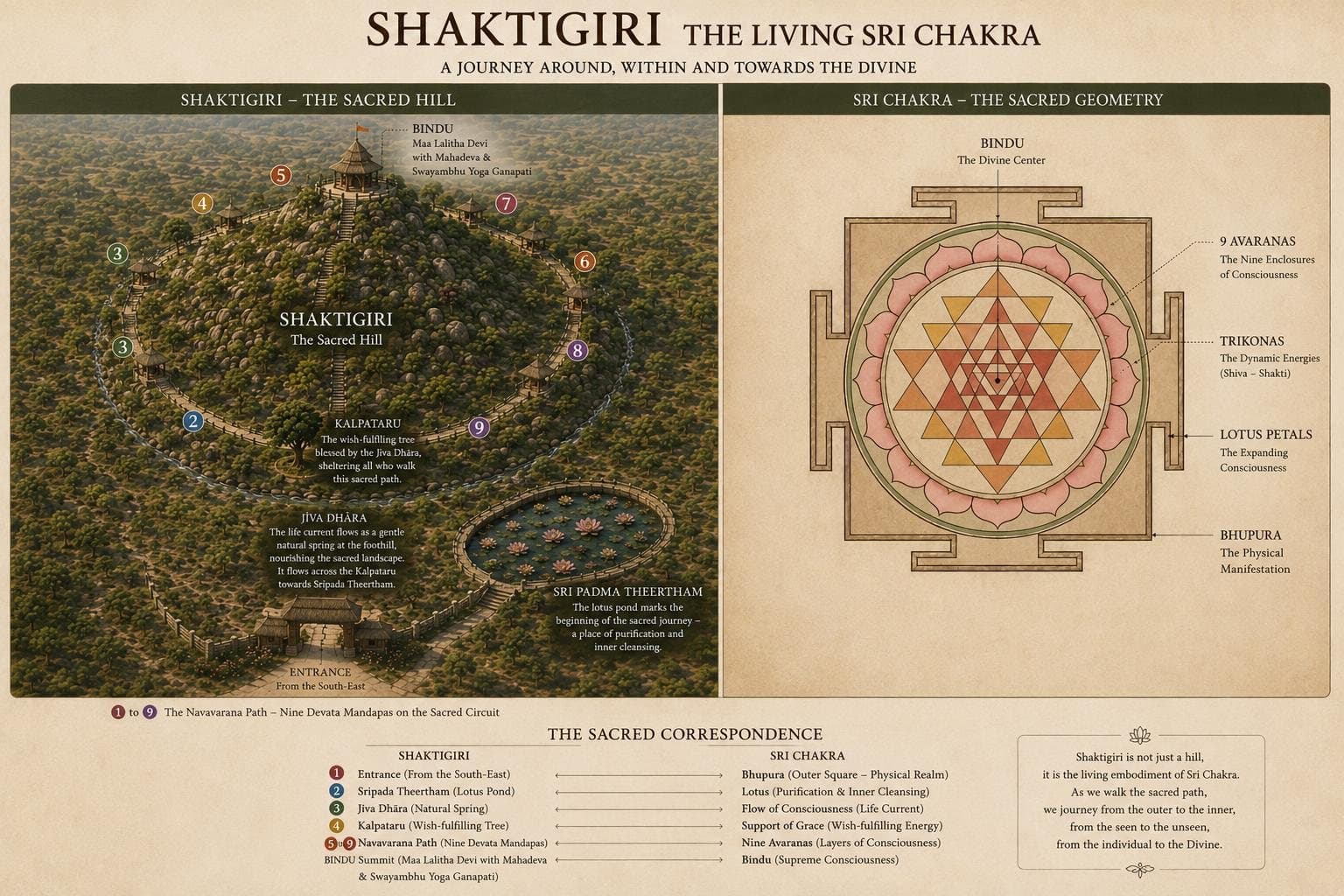
Shaktigiri is envisioned as a living Sri Chakra. The Giri Pradakshina becomes a sacred journey through the Navavarana, where each station on the circuit is a Devata Mandapa.
The journey is described in three movements — Pradakshina, around Shakti; Avarana, through Shakti; and Arohana, towards Shakti — ascending at last to the Bindu at the summit.
“As we walk the sacred path, we journey from the outer to the inner, from the seen to the unseen, from the individual to the Divine.”
 Conceptual illustration
Nalanda Dwaram
Main entrance from the public road
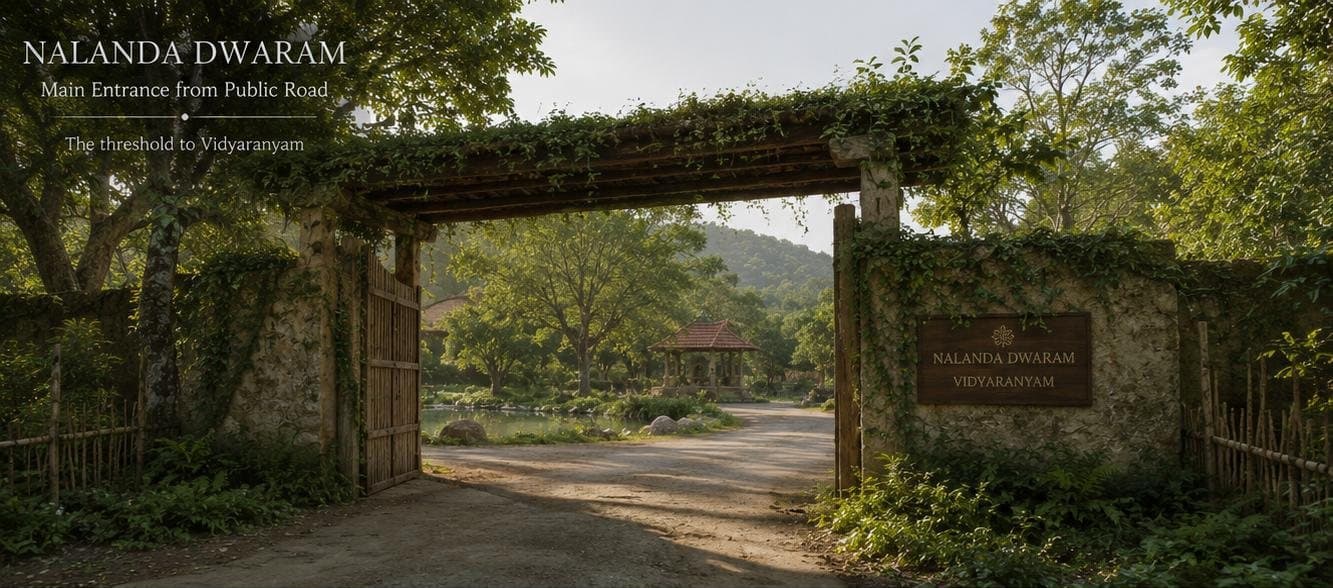
Nalanda Dwaram is the main entrance from the public road — the threshold to Vidyaranyam. From here the path leads past Sri Padma Theertham into the village of learning.
 Conceptual illustration
Thakshasila Dwaram
Entrance to the Gurukulam
Also written as Takshasila Dwaram
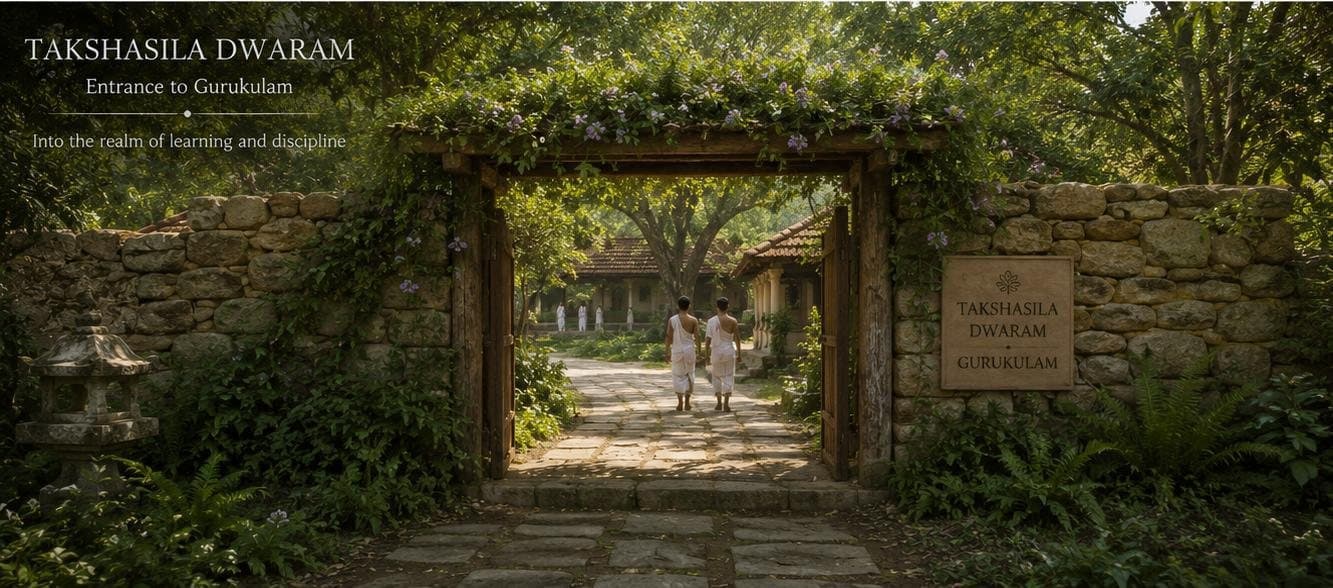
Thakshasila Dwaram is the entrance to the Gurukulam — into the realm of learning and discipline. A gateway in a stone wall, it opens onto the streets where Gurus and Shishyas live and learn together.
Shaktigiri — the living Sri Chakra
A journey around, within and towards the Divine
| Shaktigiri | Sri Chakra |
|---|---|
| Entrance (from the south-east) | Bhupura — the outer square, the physical realm |
| Sri Padma Theertham (lotus pond) | Lotus — purification and inner cleansing |
| Jeeva Dhara (natural spring) | Flow of consciousness — the life current |
| Kalpataru | Support of grace |
| Navavarana path (nine Devata Mandapas) | Nine Avaranas — layers of consciousness |
| Summit (Maa Lalitha Devi with Mahadeva & Swayambhu Yoga Ganapati) | Bindu — supreme consciousness |
Giri Pradakshina as Navavarana Yatra
The nine stations on the sacred circuit, as named in the concept.
- 1Trailokyamohana ChakraOvercoming ignorance and entering the path
- 2Sarvasaubhagyada ChakraAuspiciousness and well-being
- 3Sarvasampatprada ChakraProsperity — inner and outer
- 4Sarvasiddhiprada ChakraAttainment of spiritual powers
- 5Sarvarogahara ChakraHealing and purification
- 6Sarvarakshakara ChakraDivine protection and grace
- 7Sarvarthasadhaka ChakraFulfilment of all sacred intentions
- 8Sarvanandamaya ChakraThe bliss of the Self
- 9BinduMaa Lalitha Tripurasundari — union of Shiva and Shakti; the ultimate realisation
 Conceptual illustration
 Conceptual illustration
This is not just a hill. It is the body of the Divine.
This is not just a path. It is the journey of the soul.
This is not just a destination. It is the Bindu.
Descriptions on this page follow the Shaktigiri Vidyaranyam concept document. Visiting information, timings and ritual details will be added once verified by the organising team.